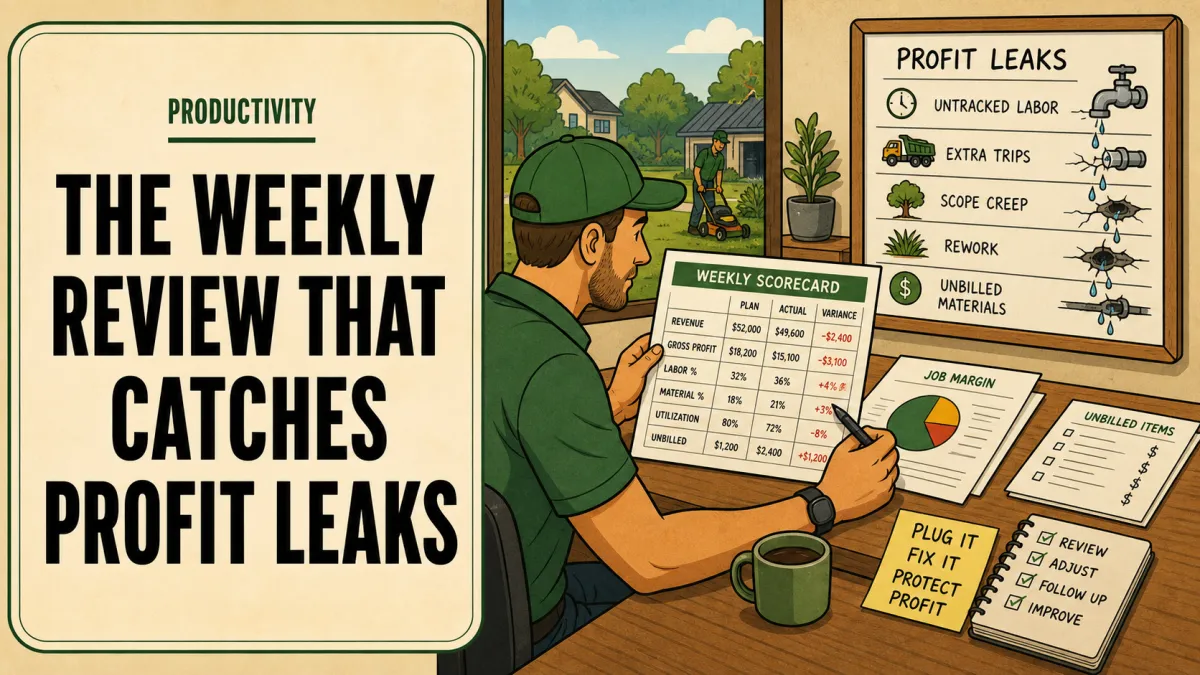
Weekly Landscaping Profit Review: Find Cost Overruns Early
A weekly profit review is a 45-minute meeting where you check five numbers, compare estimated and actual cost on the jobs completed that week, and assign a fix for every meaningful overrun. It catches leaks while the crew still remembers what happened and before the same mistake repeats on the next job. It does not replace your monthly financial statements; it makes sure they hold fewer surprises.
Updated October 9, 2026
The 45-minute agenda
Same day, same time, every week. Monday morning or Friday afternoon both work. Put it on the calendar as a fixed block; if protecting that time is the hard part, see how to protect planning time as a landscaping owner.
Minutes 0 to 5: the five numbers. Read them off one sheet. No discussion yet.
Minutes 5 to 25: estimate vs. actual. Go through every completed job that missed tolerance and tag a cause.
Minutes 25 to 35: callbacks and missing records. Which jobs came back, and which jobs are missing hours or receipts.
Minutes 35 to 45: action log. Check last week's actions, then assign this week's with a name and date.
The office prepares the sheet before the meeting. If you are the one pulling the numbers, that is a sign the review should be the first thing your office hire takes over.
The five numbers to check every week
Keep it to five. The full list of business metrics worth tracking is a bigger, separate exercise; the weekly review needs numbers you can read in five minutes and act on.
Revenue completed vs. plan. Work finished and billable this week, against what the schedule said.
Labor hours, estimated vs. actual, on completed jobs, in person-hours.
Gross margin on completed jobs, estimated vs. actual.
Cash and receivables: bank balance, plus invoices more than 30 days old.
Callback hours: time spent going back to fix finished work.
If a number is missing, mark it missing. Do not treat a blank as zero. A blank callback column usually means nobody logged it.
Estimate vs. actual by job
This is the heart of the review. For each completed job, compare the estimated cost with the actual cost, then flag anything over your tolerance. A simple rule of thumb: flag any job more than 10% over its estimated cost.
| Job | Price | Estimated cost | Actual cost | Variance | Cause |
|---|---|---|---|---|---|
| Paver walkway | $6,500 | $4,000 | $4,660 | +$660 (16.5%) | Second material trip, 6 extra person-hours |
| Spring cleanups (8 jobs) | $4,800 | $2,900 | $3,050 | +$150 (5.2%) | Within tolerance |
| Shrub install | $3,200 | $1,900 | $2,380 | +$480 (25.3%) | Plants added on site, no change order |
| Maintenance route B | $7,400 | $4,450 | $4,600 | +$150 (3.4%) | Within tolerance |
| Total | $21,900 | $13,250 | $14,690 | +$1,440 (10.9%) |
The week was planned at a 39.5% gross margin ($8,650 on $21,900). It came in at 32.9% ($7,210). Two jobs explain all but $300 of the gap, and they have different causes. The walkway needs a purchasing fix: a load list checked the night before. The shrub install needs the extra plants billed and a reminder about the change-order process. Calling the whole week "the crews were slow" would fix neither.
When labor hours are the issue, use the estimated versus actual labor-hour review to sort estimate error from scope creep and crew pace. Compare estimates with delivery costs using the landscaping job-cost worksheet so every job is measured the same way.
Keep an action log
A variance report without follow-up is just a record of money you lost. Every flagged item gets one line in the log, and next week's review checks it before anything new is assigned.
| Issue | Action | Owner | Due | Check |
|---|---|---|---|---|
| Walkway: second material trip | Crew leader signs a load list before leaving the shop | Ops manager | Next Monday | Next hardscape job |
| Shrub install: unbilled plants | Invoice the extra plants; review change orders with crew | Office | Friday | Invoice sent |
| Callback hours not logged | Add a callback line to the end-of-day report | Office | Next week | Column filled in |
Look for patterns across weeks. The same account flagged three weeks running belongs in your review of unprofitable landscaping clients. Recurring rework needs its own callback log.
Mistakes that kill the review
Calling job margin net profit. This review looks at job contribution. Overhead, financing, and taxes still come out through your monthly accounting.
Reviewing everything. Review exceptions and a sample of comparable work. Add coverage as your records improve.
Skipping weeks in the busy season. That is when leaks are biggest. Shorten it to 20 minutes if you must, but hold it.
Blaming people in the room. If crews learn that honest overruns get punished, the numbers stop being honest.
No follow-up. If the action log is not checked next week, the meeting becomes a complaint session.
For financial recordkeeping context, see the SBA business management resources. Apply consistent definitions with your accounting professional.
Frequently asked questions
What numbers belong in a weekly landscaping profit review?
Five: revenue completed vs. plan, estimated vs. actual labor hours, gross margin on completed jobs, cash and aging receivables, and callback hours. Pair those with an estimate vs. actual table by job. Use the same cost definitions every week so changes reflect performance.
How many jobs should I review each week?
Every completed job should appear on the sheet, but only discuss the ones outside your tolerance plus a small sample of the rest. As record quality improves, widen the sample. A review nobody has time to finish is worse than a short one done every week.
What should happen after a cost overrun is found?
Identify the cause, assign one specific fix with a name and a date, and check the next comparable job. Log it in the action log so it is reviewed the following week. Without that loop, the same overrun shows up again.
Explore 7 Figure Landscape Network's business systems programs or book a strategy call to discuss the operating problem you want to work on. Learn about Jim Wertz and the network.
For the broader owner time and office support process, use When to Hire an Office Administrator for Your Landscaping Business as your starting guide, then return to the specific issue covered here.
