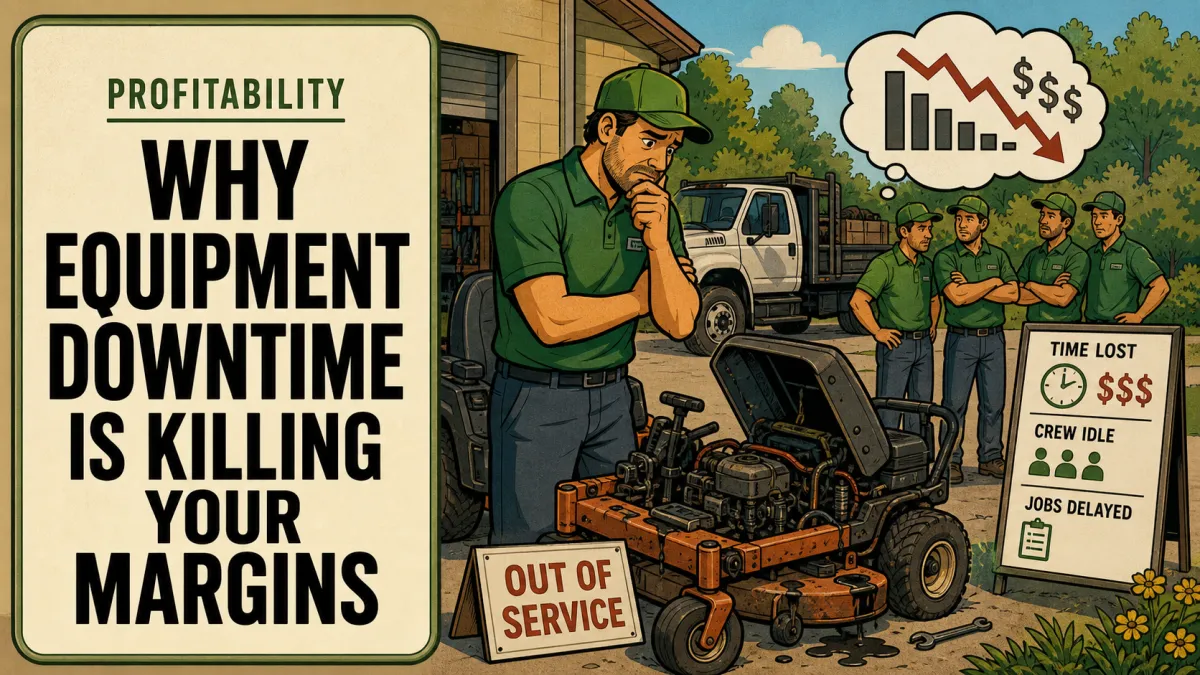
Landscaping Equipment Downtime: Calculate the Cost and Reduce Delays
Equipment downtime costs more than the repair invoice when it also creates idle crew time, extra travel, rental expense, or missed production. Record those effects separately, then compare realistic repair and replacement options. The right decision depends on workload, reliability, and cash available.
Updated September 14, 2026
Start an equipment incident log
Give each machine a consistent ID. When it becomes unavailable, record the time, job affected, symptoms, person reporting it, and the plan for the crew. Record when it returns to service and who confirmed it was ready.
Separate scheduled service from breakdowns. A preventive service visit may reduce available hours today while avoiding a longer disruption later. Log the cause only after it is checked; a suspected fuel problem is not a confirmed diagnosis.
Work through the cost once
| Cost | Calculation |
|---|---|
| Idle labor | 3 people x 1.5 hours x $35 = $157.50 |
| Repair | $240 |
| Temporary rental | $120 |
| Additional delivery charge | $40 |
| Total measured incident cost | $557.50 |
This example assumes the rental and idle time both occurred and the delivery charge excludes the labor already counted. Use actual costs. If the crew completed useful alternative work during the delay, do not classify all those hours as lost.
Potential lost sales are a separate estimate. Do not add a full job's revenue to the incident cost when the job was merely rescheduled. Connect actual charges and time to your job-cost system.
Give crews a safe response plan
- Stop affected work and secure the situation under the relevant equipment and site procedures.
- Report the machine ID, symptoms, location, and immediate production impact.
- Let an authorized person arrange service, reassignment, or replacement equipment.
- Move the crew to safe, productive work when possible.
- Record the fix and confirm readiness before returning the machine to use.
Maintenance and repair should follow the manufacturer's instructions and be performed by appropriately qualified people. Never trade safety controls for speed. Refer to OSHA's landscaping hazards and solutions when building the company's safety procedures.
Use a repair-versus-replacement review
Review repeated incidents by machine: repair spending, unavailable hours, utilization, rental needs, and how critical the equipment is to scheduled work. Compare the total expected cost of keeping it with realistic replacement or rental options. A rarely used specialty machine has different economics from a machine required every morning.
Ask suppliers about service lead times and parts availability before the next urgent failure. Keep inspections on the crew checklist where appropriate, and document who can approve a rental using the delegation process.
Frequently asked questions
How do I calculate equipment downtime cost?
Add measured repair expense, idle labor, extra rental or transport costs, and other attributable charges. Keep potential lost contribution separate and avoid counting the same wages or travel twice.
Should every landscaping company keep backup equipment?
No universal rule applies. Compare how critical the machine is, likely disruption, rental availability, ownership cost, and available cash. A planned rental arrangement may be sufficient for some equipment.
How often should landscaping equipment be serviced?
Follow the manufacturer schedule and adjust planning for operating conditions with qualified service advice. Use hour meters and service records where applicable instead of waiting for a breakdown.
Explore 7 Figure Landscape Network's business systems programs or book a strategy call to discuss the operating problem you want to work on. Learn about Jim Wertz and the network.
For the broader job costs and profitability process, use Landscaping Job Costing: A Worksheet and Worked Example as your starting guide, then return to the specific issue covered here.
