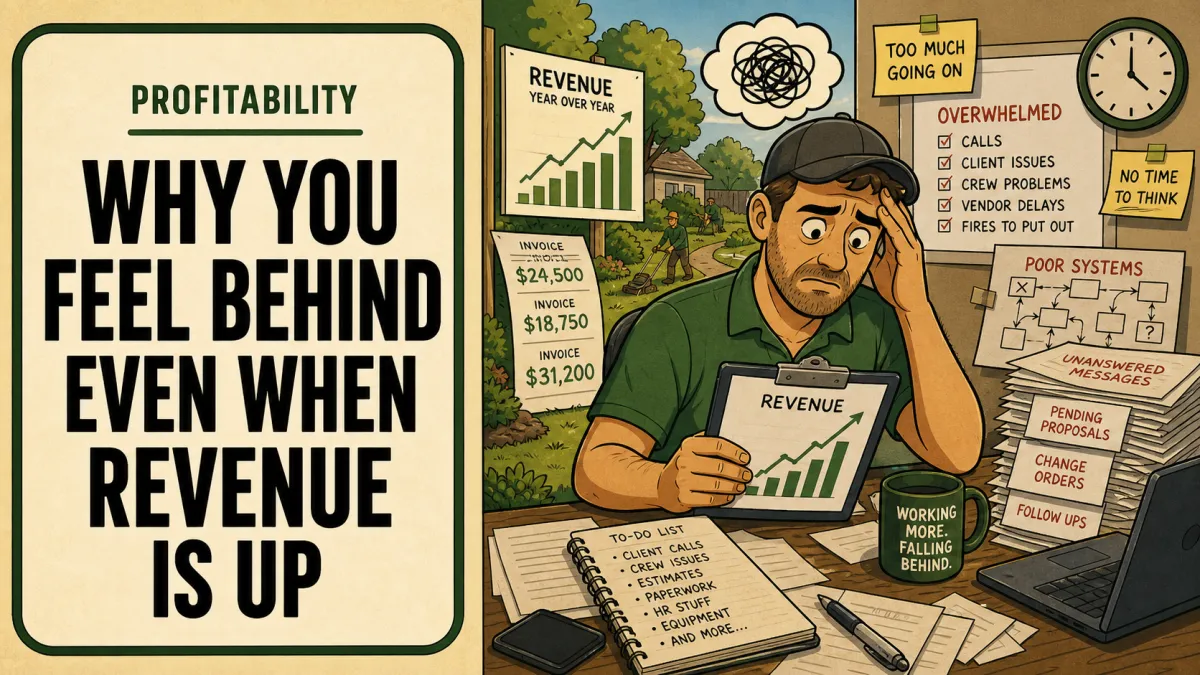
Landscaping Revenue Is Up but Cash Is Tight: What to Check
Rising landscaping revenue can leave the business short of cash when customers pay after payroll and suppliers are due, jobs consume more labor than expected, or expansion adds expenses before producing returns. Reconcile profit, cash timing, and delivery capacity before deciding that another sale will solve the pressure.
Updated September 14, 2026
A practical approach
Compare earned revenue with collected payments. List open invoices by expected collection date, and match them against upcoming payroll, supplier payments, loan payments, and other commitments.
Review the actual costs of recently completed work. An attractive sales total can conceal additional crew hours, return visits, and unbilled scope changes.
Compare estimates with actual delivery costs using the landscaping job-cost worksheet.
Separate expansion spending from normal operations. Identify which new vehicle, employee, or software cost is meant to support which additional capacity and when that capacity becomes productive.
How this works in practice
Imagine you complete $30,000 of work this month but collect $18,000 while paying $22,000 of current bills. The $4,000 cash gap does not, by itself, prove the jobs were unprofitable. It means you must examine invoice timing and available cash as well as job margins. Conversely, a customer deposit can increase cash before the related work has earned a profit.
Separate operating results from payment timing with the job margin and cash reconciliation guide.
What to watch for
Build a weekly cash outlook with your bookkeeper and use consistent accounting definitions. Avoid fixing a timing problem with indiscriminate discounts or commitments to work the crews cannot deliver.
For financial recordkeeping context, see the SBA business management resources. Apply consistent definitions with your accounting professional.
Frequently asked questions
Why can a profitable landscaping company run short of cash?
Collections, supplier payments, equipment purchases, financing, and owner withdrawals occur on different schedules. Profit and cash movement are related but different; review both with your financial records.
What should I look at first when sales rise but cash falls?
Start with unpaid invoices and upcoming commitments, then examine job-cost overruns and new overhead. This helps distinguish a collection delay from underpricing or an expansion expense.
Will more sales fix a cash shortage?
Only if the work produces sufficient contribution and the business can fund delivery until payment arrives. Additional work can make the short-term funding gap larger.
Learn about 7 Figure Landscape Network and Jim Wertz, or explore our landscaping business programs.
For the broader job costs and profitability process, use Landscaping Job Costing: A Worksheet and Worked Example as your starting guide, then return to the specific issue covered here.
