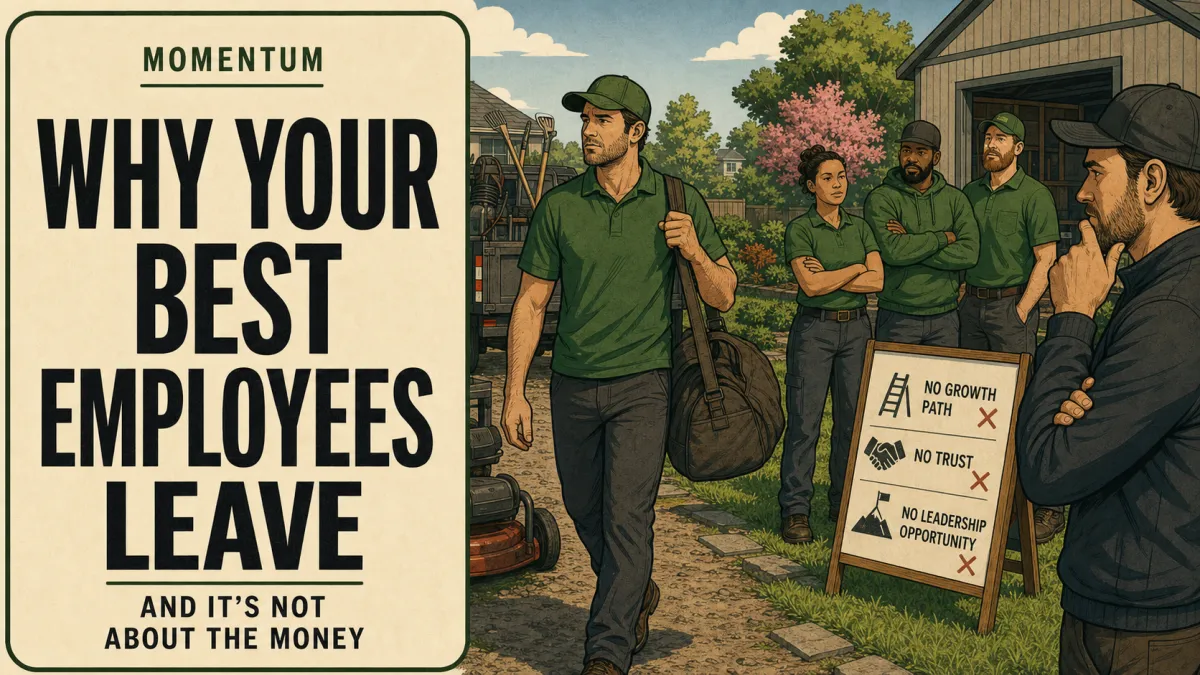
Why Landscaping Employees Quit: Pay, Growth, and Decision Authority
Why do landscaping employees quit? Pay matters, but mostly as a threshold: below market, people leave; at market, they leave for other reasons. The usual reasons are no growth path, no real authority, unclear expectations, and an owner who checks everything. Each one has a specific fix, and none of them starts with a raise.
Updated October 9, 2026
Pay is a threshold
Don't pretend money is irrelevant. If your crew leader can make $3 more an hour across town, that conversation will happen whether you like it or not. Check your rates against local postings at least once a year and fix gaps before someone else points them out.
Once pay is competitive, though, more money buys less loyalty than owners expect. A raise given to stop a resignation often buys three months. The person still has the same frustrations, now with a slightly bigger paycheck. Ask about compensation directly in conversations with employees, then ask about everything else too.
Here is how the common reasons line up, and what to change for each.
| Reason | What you hear | What to change |
|---|---|---|
| Pay below market | "I got an offer for more." | Annual market check, scheduled pay reviews |
| No growth path | "I'm doing the same thing as two years ago." | Written skill levels with pay bands |
| No authority | "I have to call you for everything." | Defined decision limits by role |
| Unclear expectations | "I never know if I'm doing it right." | Role scorecard and regular feedback |
| Micromanagement | "You redo my work anyway." | Standards agreed upfront, owner steps back |
No growth path
Your best people are the ones most likely to get bored. If the only visible step is "crew leader someday," and nobody explains what it takes, ambitious employees go where the next step is clear.
A capable installer who wants to lead but has never been trained in scheduling or customer communication needs a plan, not a pep talk. Write down three or four skill levels, what each one requires, and how someone moves up. Then build judgment within defined limits through crew leader scenario training so the step up is real.
Be honest about what exists. If there is no crew leader opening this year, say so, and offer the skills and responsibility you can support. A promised promotion that never comes is one of the fastest ways to lose a good person.
Responsibility without authority
This one quietly drives out the people you most want to keep. You hand someone more responsibility, then require them to call you before every decision. They carry the stress of the role with none of the control.
Fix it by writing down which decisions each role owns and the limits that apply, such as spending, schedule changes, and customer requests. Setting clear decision boundaries for crews walks through how to do that by role. Then back people when they make a reasonable call inside their limits, even if you would have done it differently.
Unclear expectations
People quit jobs where they cannot tell whether they are winning. If a crew leader only hears from you when something goes wrong, they assume they are always one mistake from trouble.
Give every role a short scorecard: what the job owns, what good looks like, and how it is measured. For field leaders, a foreman duties list and scorecard is a good template. Review it with them on a regular rhythm so feedback is expected rather than an ambush.
Owner micromanagement
This is the uncomfortable one. Many owners say they want people who think for themselves, then show up on site, redo the edging, and change the plan in front of the crew. The message is clear: your judgment doesn't count here.
Watch for these signs in your own week:
You drive by jobs to check work that already passed the quality checklist.
You change crew assignments without telling the crew leader.
You answer customer calls about work the crew leader is handling.
You correct people in front of their crew.
You give instructions directly to crew members, skipping their leader.
If two or more sound familiar, the fix is on your side. Agree on the standard upfront, inspect against the standard, and give feedback privately to the person responsible. Stop being the foreman. Start being the owner.
When someone does leave, find out which of these reasons applied by running a departure review with the right exit questions. Then turn what you learn into a practical retention plan for the people still on your team.
Frequently asked questions
Is pay the main reason landscaping employees leave?
Pay is the main reason when it falls below what similar jobs pay locally. Once it is competitive, growth, authority, clear expectations, and how they are managed usually matter more. Ask directly about pay and the rest, instead of assuming one explanation.
How can I offer growth without an immediate promotion?
Write skill levels with pay bands, teach new skills on a schedule, and give clearly scoped responsibilities like training a new hire or running the crew for a day. Be honest about which roles actually exist and how people will be considered for them.
Will giving employees more authority improve retention?
It helps when the person wants the responsibility and gets training and clear limits with it. Authority without support just adds stress. It also does not replace fair pay or workable schedules.
Explore 7 Figure Landscape Network's business systems programs or book a strategy call to discuss the operating problem you want to work on. Learn about Jim Wertz and the network.
For the broader team leadership and accountability process, use Landscaping Crew Accountability: Standards, Owners, and Reviews as your starting guide, then return to the specific issue covered here.
