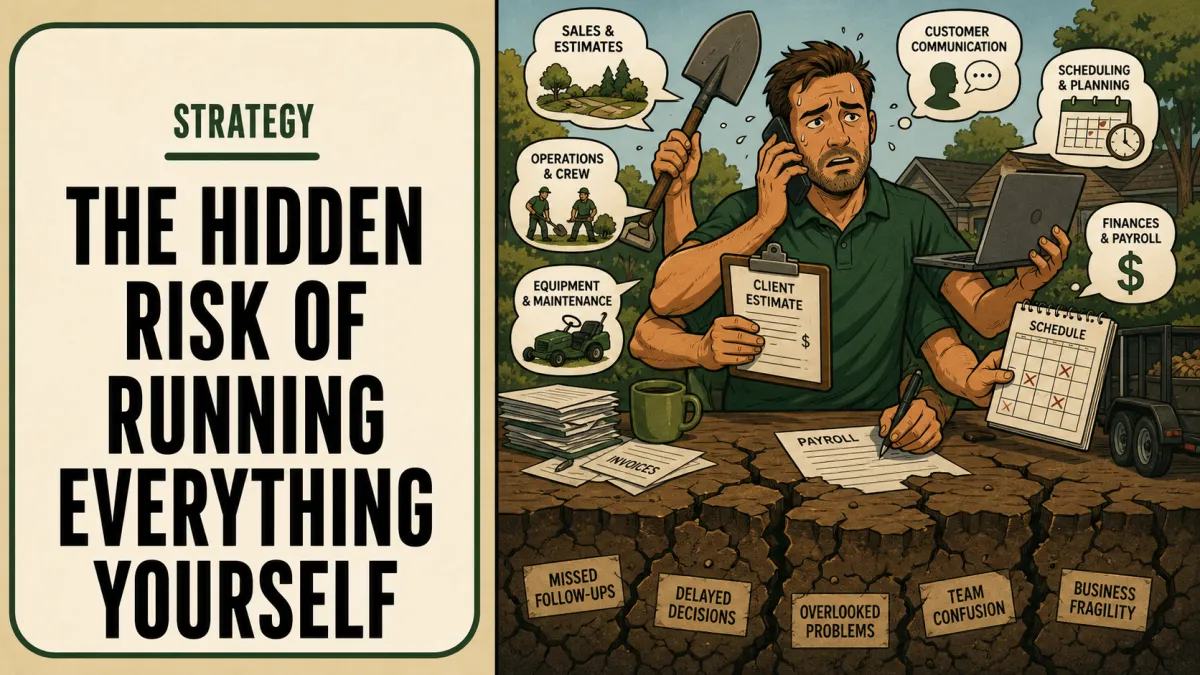
Landscaping Owner Emergency Plan: Protect Critical Business Functions
A business owner emergency plan answers one question: if you were hurt tomorrow and could not pick up the phone for six weeks, who would run payroll, talk to customers, and pay the bills? Put the answers in an emergency binder, name the people who can act, and check your signing authority and insurance before you need them. The first version takes a weekend.
Updated October 9, 2026
What happens if you are injured tomorrow
Most owners have thought about this for about ten seconds, usually while climbing off a trailer. Walk through it properly. The problems stack up over weeks.
| Window | What breaks without a plan | Who acts | What they need from the binder |
|---|---|---|---|
| Days 1 to 3 | Crews arrive with no assignments; customers with scheduled installs hear nothing | Lead crew leader runs dispatch; office calls customers | Next week's schedule, customer contacts, emergency contact list |
| Weeks 1 to 2 | Payroll comes due; install materials need ordering; new leads go cold | Payroll backup with the provider; install foreman orders | Payroll provider contact, supplier accounts, open estimates |
| Weeks 3 to 6 | Rent, equipment loans, and tax deposits come due; cash gets tight; employees start to worry | Designated signer pays bills; named person updates the team | Bills calendar, bank authority, accountant contact |
| Beyond 6 weeks | Bigger calls: hire a manager, pause sales, renegotiate contracts | Person with legal authority to decide | Operating agreement, power of attorney, attorney and agent contacts |
This plan is about you personally. Covering the company's other single-person dependencies, like the only admin who runs billing, belongs in the business continuity plan.
Build the emergency binder
One binder, one place, readable by someone who has never done your job. Include:
- A one-page "start here" sheet listing who to call first, in order.
- Key contacts: accountant, attorney, insurance agent, banker, payroll provider, top suppliers, equipment dealer, and your largest customers.
- Accounts: every bank account, credit card, line of credit, and equipment loan, with lender and due dates.
- Where passwords are kept, never the passwords themselves. A company password manager with an emergency access feature for one named person works well.
- Payroll: provider, pay schedule, authorized users, and where timesheets come from.
- A bills calendar: rent, loans, insurance premiums, payroll and sales tax deposits.
- Active jobs: installs in progress, deposits taken, maintenance contracts and renewal dates.
- Insurance policies with carrier, policy number, and agent.
- Legal documents: operating agreement, any buy-sell agreement, power of attorney, and where your will is kept.
- Physical access: spare keys, alarm codes, and where vehicle titles are stored.
Keep the binder in a locked cabinet at the office and give a sealed copy to your spouse or attorney.
Decide who can sign and spend
Information is useless without authority. If yours is the only name on the bank account, nobody can pay the stone yard, no matter how good the binder is.
Ask your banker about adding an authorized signer or online user with limits. Set up a second admin user with your payroll provider. Talk to your attorney about a durable power of attorney for business matters and what your operating agreement says about incapacity. If you have partners, a buy-sell agreement matters here too. Confirm every one of these with the professional involved; the rules vary.
Then write spending rules for whoever steps in. Example: the office admin can pay anything on the bills calendar, the acting leader can approve repairs up to $2,500, and anything larger needs two people to agree. Clear limits stop the team from freezing and stop anyone from overreaching.
Insurance to review with your agent
Most owners do not know what their policies actually pay if they are hurt. Ask your agent about four things: disability income coverage that replaces your personal pay, business overhead expense coverage that pays fixed costs like rent and loan payments, key-person coverage that pays the company, and whether you as the owner are covered under your workers' compensation policy, which varies by state and entity type.
Pay attention to waiting periods. If a policy waits 90 days before paying, the binder and your cash reserve have to carry the company through the first three months. If cash is already tight, read why revenue is up but cash is tight. How lenders and buyers view this exposure is covered under key-person risk.
Brief the people who will use it
Pick two or three people, usually a family member, your strongest crew leader, and your office admin, and walk them through the binder. Then run a tabletop exercise: "It is Tuesday, 6 a.m., and I am in the hospital. What do you each do first?" Their answers show you what is missing.
Next, check whether the team can actually act with the business continuity handoff guide, and validate coverage before a longer absence through a planned test day away. If the exercise raises bigger questions about where the business goes long term, work through three questions to set your business direction.
Review the binder every preseason and whenever your bank, payroll provider, key staff, or insurance changes. Use the Ready.gov business emergency planning resources when developing the wider disruption response.
Frequently asked questions
What belongs in a landscape owner emergency plan?
A start-here sheet, key contacts, account and bills lists, payroll details, active jobs, insurance policies, legal documents, and where passwords and keys are kept. Add named backups and written spending limits. Prioritize the obligations that cannot wait, like payroll and customer commitments.
Should I share my passwords with a backup manager?
No. Give backups their own accounts with the permissions they need, and use a password manager with emergency access for one trusted person. Shared personal credentials create security and accountability problems.
How often should a continuity plan be tested?
Walk through it at least once a year, ideally before the season starts, and again whenever roles, systems, or major obligations change. Confirm that contacts are current and that backups can still log in and act.
Explore 7 Figure Landscape Network's business systems programs or book a strategy call to discuss the operating problem you want to work on. Learn about Jim Wertz and the network.
For the broader business planning and growth process, use Landscaping Business Strategic Plan: A One-Page Framework as your starting guide, then return to the specific issue covered here.
