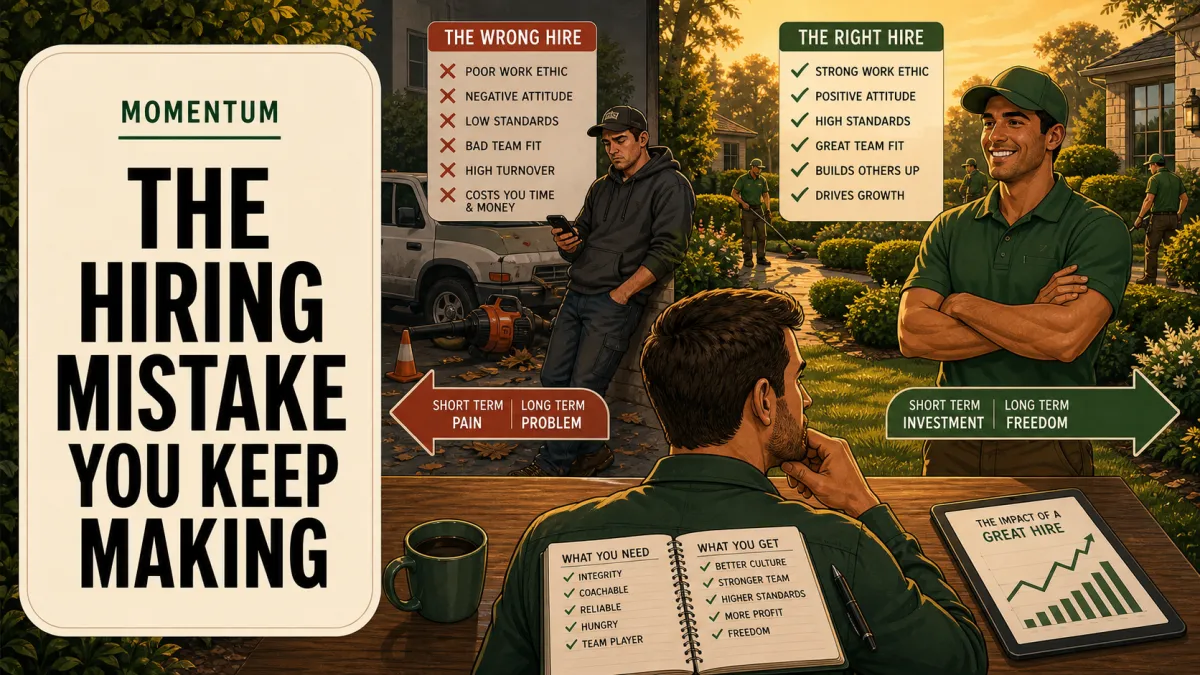
Landscaping Hiring Process: Define the Job Before Interviewing
To hire landscaping employees who last, define the job and a short scorecard before you post anything, then look in the places crew members actually find work, test real skills in a paid working interview, and check references with specific questions. The mistake most owners repeat is hiring in a panic with no process. Urgency should change how fast you run the process, not whether you have one.
Updated October 9, 2026
Write the role scorecard before you post
Most bad hires start with a vague ad: "Landscaper wanted, experience preferred." You get vague applicants and you judge them on gut feel. Instead, write down what the person must deliver in the first 90 days and how you will know.
Separate the must-haves from what you can teach. A valid driver's license might be essential for a crew leader. Knowing your mower brand is not. Include the schedule, physical demands, pay range, and who the person reports to.
| Area | What good looks like by day 90 | How you check it |
|---|---|---|
| Reliability | On time for every start, no unexcused absences | Time records |
| Safety | Wears PPE, follows equipment procedures without reminders | Crew leader observation |
| Quality | Edging, trimming, and cleanup pass the job checklist | Weekly spot checks |
| Pace | Within 15% of crew standard on routine maintenance stops | Run sheet times |
| Communication | Reports damage, delays, and customer requests the same day | End-of-day report |
For a crew leader or foreman hire, start from a written list of foreman duties and a scorecard. If the real bottleneck is office work rather than field work, evaluate when an office administrator is justified before adding another crew member.
Where to find landscaping crew members
The best crew members are usually not scrolling job boards. Work several channels at once:
Employee referrals. Pay a referral bonus in two parts, half at 30 days and half at 90 days, so people refer workers who stick.
Local job boards and social groups, with a clear ad showing pay range, start time, and what a normal day looks like.
Vocational and horticulture programs at high schools and community colleges, especially for seasonal and future crew leader roles.
Suppliers and nurseries. Counter staff know who is looking for work and who is reliable.
Past seasonal workers you would gladly rehire. Keep a list and call them in January.
Timing matters as much as channel. Build hiring into your preseason capacity planning so you are interviewing in February, not in May when every crew is short.
Run a paid working interview
A sit-down interview tells you who talks well. A short working interview tells you who works well. Have strong candidates spend a few hours with a crew on a safe, routine task such as trimming, bed cleanup, or loading the trailer.
Pay them for that time. Working interviews generally count as hours worked, so confirm how wage rules apply with your accountant or employment attorney and review the Department of Labor guidance on the Fair Labor Standards Act. Keep the task safe and appropriate, and make sure the person is properly covered under your insurance. Check with your agent.
During the work, the crew leader watches for a few specific things: do they show up on time, follow instructions the first time, ask questions when unsure, and keep working when nobody is watching. For crew leader candidates, add a scenario question: materials arrive late and the client asks for extra work. Evaluate whether they communicate, protect the approved scope, and escalate appropriately. A good technical worker may still need leadership training, and you can build that later through crew leader scenario training.
Reference questions that get real answers
"Was he a good worker?" gets you "yes" every time. Ask questions that require a specific answer:
What was their role and how long did they work for you?
How often were they late or absent during the busy season?
Tell me about a time they made a mistake. How did they handle it?
What kind of supervision did they need?
Would you rehire them for the same role? Why or why not?
Pay attention to hesitation on question 5. A quick, warm "absolutely" is worth more than a long careful answer.
Plan the first week before the offer
New hires decide fast whether they made a mistake. Before you make the offer, name the trainer, set the first tasks, schedule required safety instruction, and pick two review points in the first month.
Day 1: paperwork, gear, safety basics, ride along with the crew leader.
Days 2 to 3: one task taught and checked against the job checklist.
Day 5: a ten-minute check-in. What is clear, what is confusing, what they need.
Hiring well gets someone in the door. Keeping them is a separate job, covered in the landscaping employee retention plan.
Frequently asked questions
What should a landscaping job description include?
Describe the outcomes, daily duties, schedule, pay range, physical demands, and required licenses. Say who the employee reports to and what good performance looks like in the first 90 days. Clear ads attract fewer but better applicants.
Should I hire the most experienced candidate?
Only when the experience gives them skills your role actually needs and their references back it up. A reliable, coachable person with less experience often outperforms a veteran with habits you will spend months undoing. Weigh experience against the scorecard.
How do I reduce rushed hiring decisions?
Write the scorecard, interview questions, and first-week plan before a vacancy becomes urgent. Keep a bench of past seasonal workers and referrals. With the process ready, pressure speeds things up without turning the decision into a guess.
Explore 7 Figure Landscape Network's business systems programs or book a strategy call to discuss the operating problem you want to work on. Learn about Jim Wertz and the network.
For the broader team leadership and accountability process, use Landscaping Crew Accountability: Standards, Owners, and Reviews as your starting guide, then return to the specific issue covered here.
