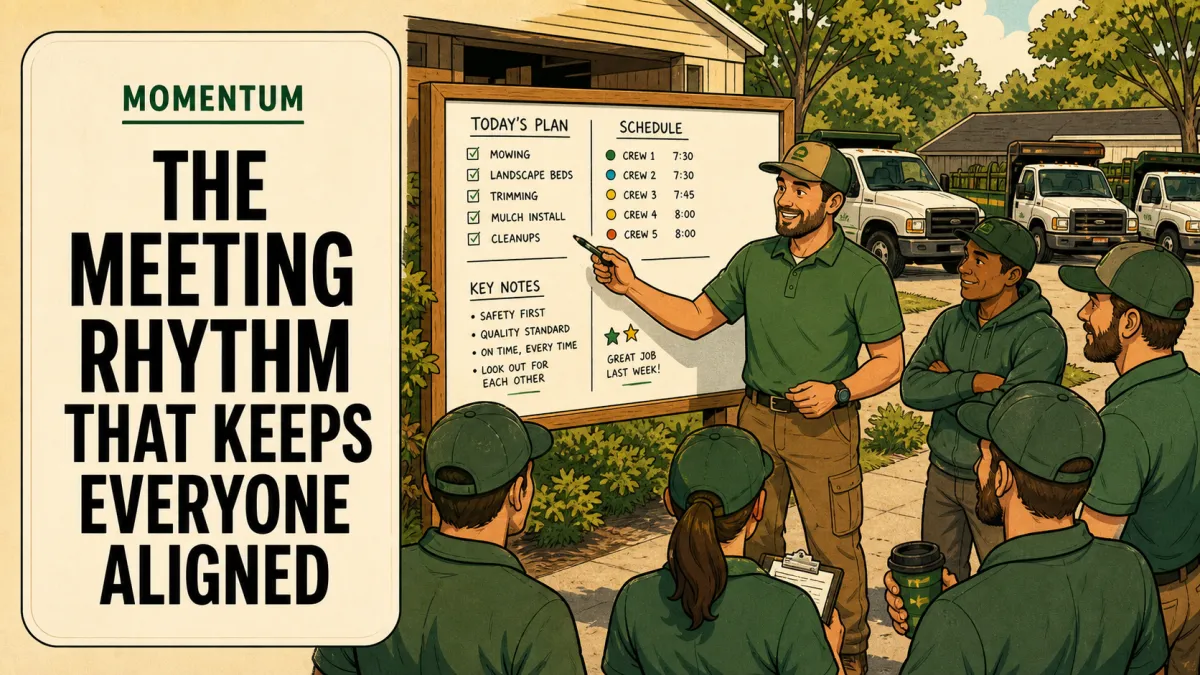
Landscaping Team Meetings: A Practical Weekly Agenda
A useful landscaping meeting resolves decisions that people cannot make independently, reviews exceptions, and assigns follow-up work. Separate a brief daily coordination check from the weekly operating review and longer planning discussions. Each meeting should produce decisions or actions, not another round of status reports.
Updated September 14, 2026
A practical approach
Use the daily check to confirm assignments, access, materials, and immediate obstacles. Handle information that everyone can read asynchronously outside the meeting where practical.
Use the weekly review for labor variances, customer issues, equipment problems, and the coming schedule. Bring the relevant records so the team can decide instead of debate recollections.
Capture completed work and unresolved issues in a structured end-of-day crew report.
End with a written action list: issue, decision, owner, and due date. Begin the next review with unresolved commitments before introducing additional initiatives.
How this works in practice
A weekly operating agenda might allocate five minutes to prior actions, ten to job exceptions, ten to upcoming constraints, and five to decisions and owners. Those times are a starting design, not a rule. If a single estimate dispute consumes the meeting, assign the right people to resolve it separately and report the decision.
Make follow-up specific with clear crew accountability standards.
What to watch for
Avoid making every employee attend every meeting. Invite the people who supply necessary information or have authority to act. Longer meetings are not evidence of stronger accountability.
Frequently asked questions
How often should a landscaping team meet?
Use a short coordination rhythm appropriate to daily field work, a regular review of operating exceptions, and separate planning sessions. Frequency should reflect actual decisions and communication needs.
What belongs in a weekly landscaping operations meeting?
Review prior commitments, job-cost exceptions, customer concerns, equipment constraints, and next week's capacity. Finish with decisions, named owners, and due dates.
How can we stop meetings from repeating the same problems?
Keep a decision and action record, check completion, and investigate the cause of recurrence. Discussion without an owner or a changed process is unlikely to resolve the issue.
Learn about 7 Figure Landscape Network and Jim Wertz, or explore our landscaping business programs.
For the broader team leadership and accountability process, use Landscaping Crew Accountability: Standards, Owners, and Reviews as your starting guide, then return to the specific issue covered here.
