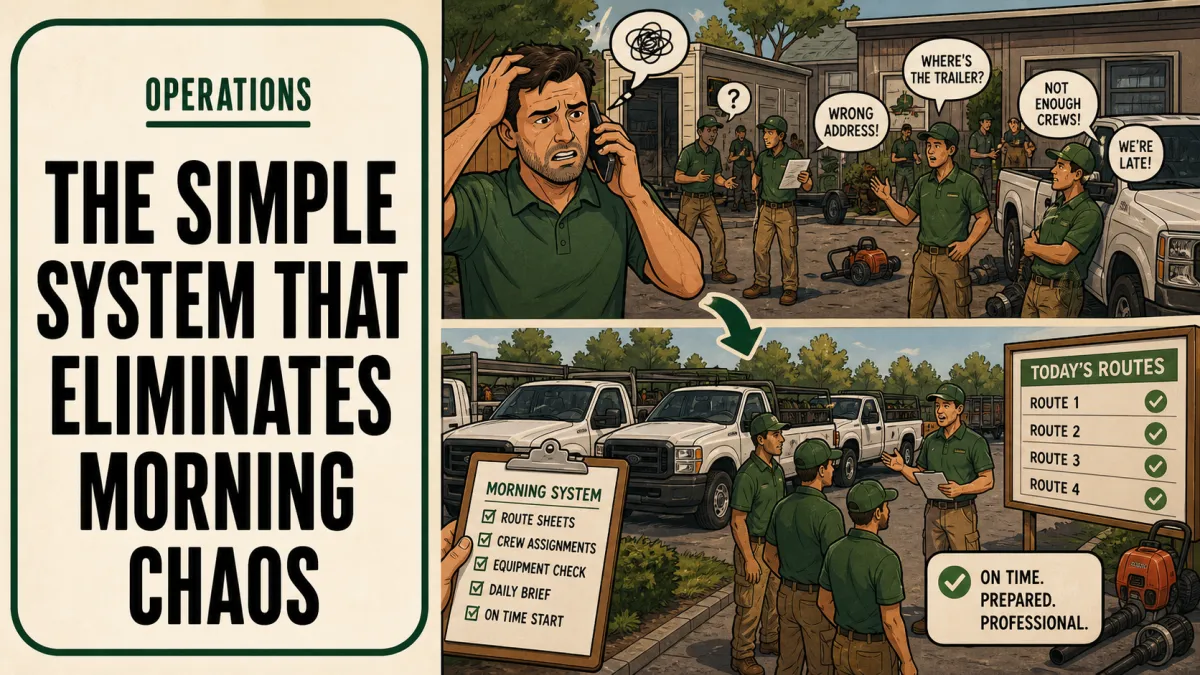
Landscaping Morning Dispatch Checklist: Prepare Before Crews Arrive
A landscaping morning dispatch checklist works only if most of it gets done the afternoon before. Confirm tomorrow's route, crew, materials, equipment, and client notes while suppliers and customers can still answer the phone. Then use a short morning check in the yard to catch exceptions, not to plan the day from scratch.
Updated October 9, 2026
Morning chaos starts the afternoon before
Picture a typical bad morning. Three crews show up at 6:45. One leader cannot find the plant order. Another asks which property comes first. The trimmer on the third truck has a cracked head and nobody flagged it yesterday. The owner spends forty minutes answering questions, and the first crew rolls at 7:40.
None of those problems started at 6:45. They were all knowable by mid-afternoon the day before. That is why dispatch has two parts: a night-before checklist owned by the office or operations manager, and a short morning check owned by each crew leader.
If your mornings are dominated by phone calls and fires, the related guide on reducing morning interruptions covers the owner's side. This checklist covers the crews' side.
The night-before dispatch checklist
Run this between 2:00 and 4:00 p.m. Every item gets one owner and a deadline. Anything unresolved by the deadline gets written on the board with a name next to it.
| Item | What to confirm | Owner | Done by |
|---|---|---|---|
| Route | Job order, drive time, properties with time windows or gate codes | Operations manager | 3:00 p.m. |
| Crew | Who is on each truck, absences, anyone needing a qualified operator | Operations manager | 3:00 p.m. |
| Materials | Deliveries confirmed with supplier, yard stock counted, load list written | Office or purchasing | 3:30 p.m. |
| Equipment | Machines needed are working, fueled, and not tagged out for repair | Shop lead or crew leader | End of day |
| Client notes | Access instructions, pets, irrigation, customer requests, approved changes | Office | 3:30 p.m. |
| Run sheets | Updated with the above and ready for each leader | Operations manager | 4:00 p.m. |
Everything in that last row lands on the crew's daily run sheet, which is the document the crew carries all day. The checklist is how you get the run sheet right. Keep detailed job specifications in the work order, not in the checklist.
The 15-minute morning yard check
If the afternoon was done well, the morning is short. Each crew leader runs through this before the truck leaves:
Run sheet in hand, and it matches what the office posted last night.
Every person listed is present. Gaps go to the operations manager immediately.
Load list checked against what is on the truck and trailer.
Walk-around on each machine: fuel, oil, blades, guards, tires. Anything unsafe stays in the yard.
Any change since last night is written on the run sheet, not just said out loud.
Leader confirms the first stop and the escalation contact for the day.
If a machine fails the walk-around, the crew follows the equipment breakdown plan rather than waiting for the owner to decide.
What a messy morning costs
Late departures feel like a minor annoyance. Put numbers on them and they look different.
Example: a company runs four crews of three. On a bad morning each crew leaves 30 minutes late. That is 12 people times half an hour, or six paid person-hours with no production. At a loaded labor cost of $32 per person-hour, that is $192. If it happens three days a week across a 30-week season, the company loses about $17,000 in labor before a single blade hits grass. A related post shows how to calculate the cost of crew waiting time across the whole day.
Track three numbers each week: crews leaving more than 15 minutes late, return trips to the yard or supplier, and jobs that could not start as planned. Review the cause each time. A recurring missing-material problem needs a purchasing fix, not a longer motivational talk in the yard.
Handle exceptions before the trucks roll
The checklist will not stop weather, sick calls, or a supplier who promised and did not deliver. What it does is surface those problems early enough to pick a backup.
Example: at 3:30 p.m. a mulch delivery is still unconfirmed. The office flags the job and assigns one person to confirm by 6:30 a.m. If the supplier cannot confirm, the crew starts on an approved alternate job that is already scoped and on file. Nobody drives to a site where they cannot begin.
Keep a short list of approved fill-in work for each crew, such as small cleanups, bed edging, or punch-list items. That list lets the operations manager reroute a crew in five minutes without a call to the owner.
After the day, completed work and unresolved items come back through the structured end-of-day crew report, which feeds the next afternoon's checklist. For where dispatch sits in the full operating day, see landscaping daily operations.
Frequently asked questions
What belongs on a landscaping morning dispatch checklist?
Route order, crew assignments, materials and load lists, equipment readiness, and client notes such as access and approved changes. Each item needs an owner and a deadline. Keep detailed specifications in the work order and the job record.
When should tomorrow's jobs be prepared?
Prepare as much as possible the prior afternoon, when suppliers and customers can still answer questions. A 2:00 to 4:00 p.m. window works for most companies. Use the morning only to confirm readiness and handle changes.
How can we measure better dispatch?
Track late departures, return trips for materials, and jobs that could not start as planned. Review the cause of each one weekly rather than judging departure time alone. The trend tells you whether the checklist is working.
Explore 7 Figure Landscape Network's business systems programs or book a strategy call to discuss the operating problem you want to work on. Learn about Jim Wertz and the network.
For the broader crew operations and delegation process, use How to Delegate Landscaping Work: A Practical Handoff Template as your starting guide, then return to the specific issue covered here.
