Landscaping Equipment Breakdown Plan for Crews
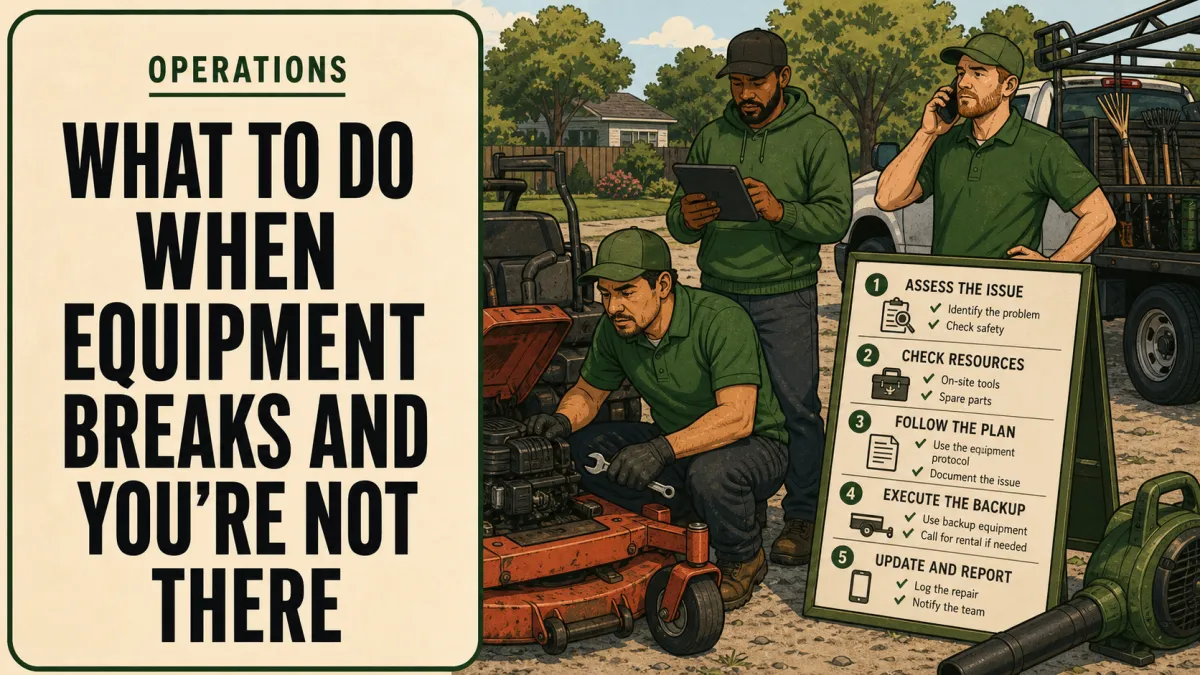
A landscaping equipment breakdown procedure tells the crew exactly what to do when a machine fails and the owner is not there: protect people first, take the unsafe equipment out of service, sort the problem by severity, and follow written rules for backup equipment, repair calls, and rescheduling. The crew handles the response. A named person with spending authority makes the money decisions. Nobody improvises beyond their training.
Updated October 9, 2026
Step one is always safety
When a mower throws a belt on a busy day, the instinct is to keep going and finish the property. That is how people get hurt and small faults become engine rebuilds.
Your written procedure should start the same way every time:
Stop using the machine. Shut it down following the manufacturer's instructions.
Make it safe according to your company's isolation procedure, such as removing the key and disconnecting the spark plug where the manual calls for it.
Tag it out of service so nobody else on the crew picks it up.
Do not let anyone attempt a repair, bypass a guard, or override a safety switch unless they are trained and authorized for that specific job.
A written plan does not replace equipment-specific training, the operator's manual, or your injury response procedure. Those need to be in place separately and understood by every crew member. For task-specific safety planning, consult the OSHA landscaping resources alongside equipment instructions, and confirm your procedures with your safety advisor or insurance agent.
Triage the breakdown by severity
Once people and equipment are safe, the crew leader sorts the problem. A simple three-level scale keeps the decision out of the owner's phone.
| Level | Example | Crew action | Who decides next step |
|---|---|---|---|
| Level 1: Minor, crew can fix | Trimmer line jam, clogged deck chute, loose handle bolt | Fix per training, note it on the end-of-day report, keep working | Crew leader |
| Level 2: Out of service, work can continue | One of two mowers down, blower will not start | Tag out, finish with remaining equipment, notify operations manager | Operations manager |
| Level 3: Job stopped or unsafe | Only mower down, hydraulic leak on a skid steer, truck or trailer problem | Tag out, secure the site, call operations manager immediately | Operations manager, owner only above spending limit |
When the crew leader calls, the message should include the asset number, the symptoms, the location, and which jobs are affected. Facts are enough; the crew should not be diagnosing faults beyond their training.
Write these levels down and decide them with your crew leaders in advance. Crews that do not know their limits will either call about everything or decide things they should not. Setting decision boundaries for crews covers how to draw those lines.
Backup equipment and the repair vendor card
The response is only as good as what the crew can reach. Put a laminated card in every truck, or a pinned note in your field app, with:
Who to call for Level 2 and Level 3, with a backup name if that person does not answer in 15 minutes.
Your primary and backup repair shops, their hours, and whether they do field calls.
The nearest rental yard for each service area, with the account number on file.
Which spare machines are kept in the yard and who is qualified to run them.
Roadside assistance for trucks and trailers.
Spares only help if they are ready. Any backup machine should be inspected and on the same maintenance schedule as primary equipment. Check this during the preseason planning review and on the nightly equipment line of the morning dispatch checklist.
Whether to buy more spares, lease, or rent on demand is a separate capital decision. Make it from your breakdown history, not in the middle of a bad Tuesday.
Rescheduling rules and spending limits
Most breakdown calls to the owner are really permission requests: can I rent a mower, can I push the last two stops, can I call the mobile mechanic. Answer those questions once, in writing.
Example rules for a three-crew company:
The operations manager may approve rentals or repairs up to $500 per incident without calling the owner.
Maintenance stops may move up to one day without customer approval; the office notifies the customer the same day.
Install jobs with a promised date require the office to call the customer before the crew leaves the site.
A crew with a Level 3 breakdown is reassigned to approved fill-in work if no backup is available within an hour.
Set your own numbers, so the person on the ground knows the answer before the machine breaks. The cost side of these decisions, including how lost crew hours add up, is covered in the equipment downtime cost review.
Report it so it does not happen again
Every breakdown above Level 1 gets recorded in the structured end-of-day crew report: asset, symptoms, time, location, affected work, response, and who was called. The operations manager then logs the repair outcome against the asset.
Review the log monthly. The same machine failing three times is a replacement question. The same fault across several machines is a maintenance or training gap.
Frequently asked questions
What should a landscaping crew do first when equipment fails?
Stop using the machine, make it safe following the manufacturer's instructions and your company procedure, and tag it out of service. Then notify the designated manager before attempting anything beyond the crew's training or authority.
Who should decide whether to rent replacement equipment?
A named person with written spending authority, usually the operations manager. They check whether the rental is suitable, whether a trained operator is available, and how the delay affects committed work. The owner only needs to be involved above the agreed limit.
What breakdown information should we record?
Record the asset number, symptoms, time, location, affected work, the response taken, and the repair outcome. Review the history monthly to improve maintenance, training, and backup planning.
Explore 7 Figure Landscape Network's business systems programs or book a strategy call to discuss the operating problem you want to work on. Learn about Jim Wertz and the network.
For the broader crew operations and delegation process, use How to Delegate Landscaping Work: A Practical Handoff Template as your starting guide, then return to the specific issue covered here.
